Welding fumes: visible emissions, underestimated risks
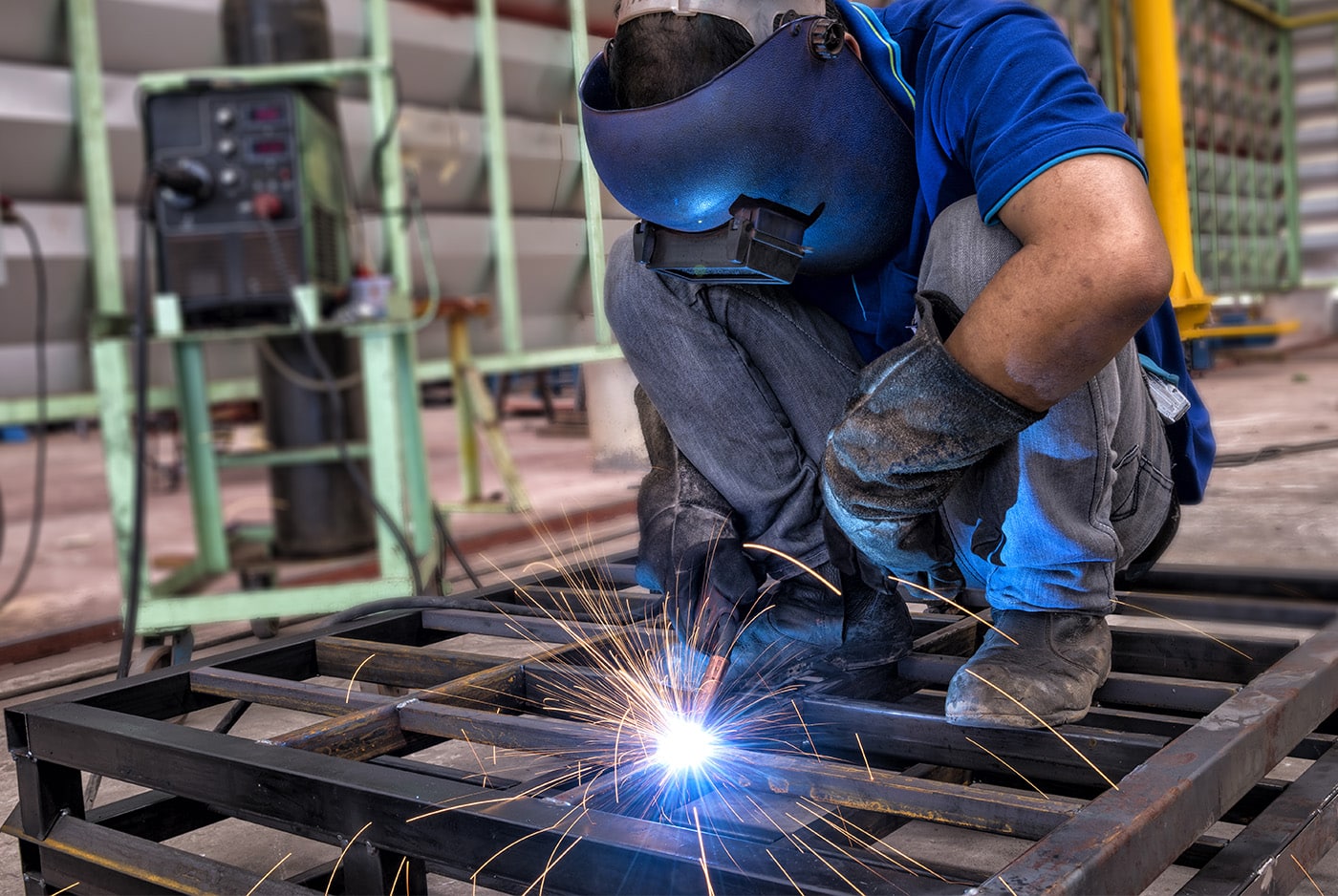
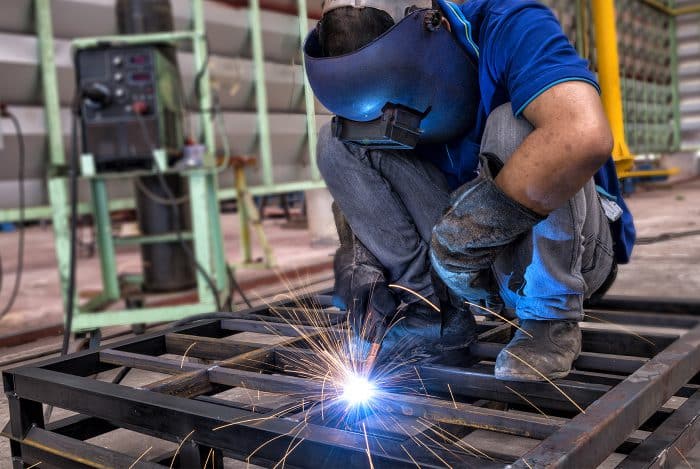
Welding and related processes generate welding fumes: a mixture of fine particulate matter, gases and vapours. These substances are formed at high temperatures and may vary significantly in composition depending on the materials and processes used. Welding fumes consist largely of respirable particles that can penetrate deep into the lungs when inhaled.
Exposure to welding fumes can lead to both short-term and long-term health effects. Employers are required to prevent exposure where possible or, if this is not reasonably achievable, to reduce it to the lowest possible level.
Safety
In addition to health risks, welding fumes can also affect the working environment. This may lead to:
- Reduced visibility during work
- Deposits on machinery and installations
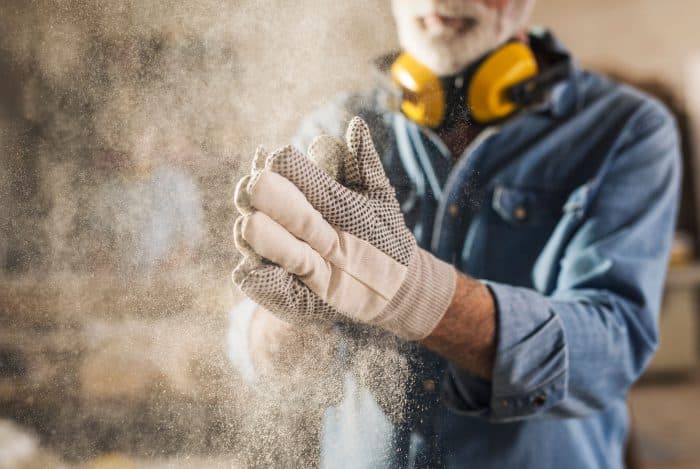
- Distribution of particles throughout the workshop
- Increased cleaning and maintenance requirements
Effective control therefore improves both safety and working conditions. Furthermore employers are obliged to keep exposure under the occupational exposure limit and reduce it further wherever possible.
Exposure limits and employer responsibilities
Welding fumes fall under exposure to hazardous substances as defined in occupational health and safety regulations. In The Netherlands, the occupational exposure limit for welding fumes is 1 mg/m³ as an 8-hour time-weighted average (TWA).
Employers are required to:
- assess exposure risks (e.g. through risk assessments)
- implement appropriate control measures
- and ensure exposure remains below the legal limit and is reduced further where possible
Control welding fumes
Effective control of welding fumes starts with source control, such as local exhaust ventilation directly at the welding process. This is the primary measure within the hierarchy of controls.
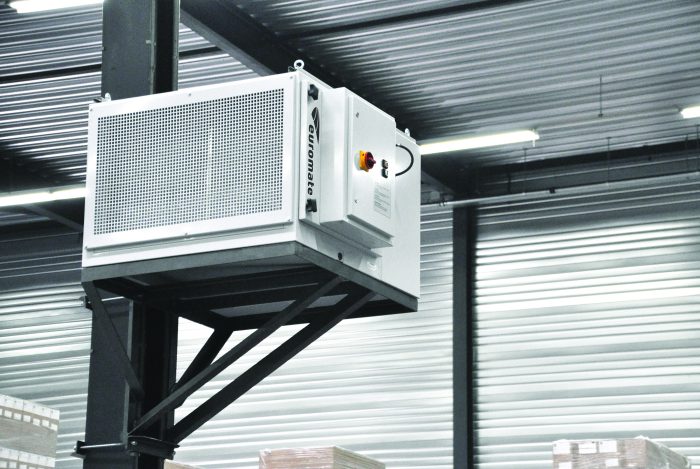
In practice, however, part of the welding fumes may still disperse into the workspace, depending on factors such as work position and air movement. Additional measures, such as general ventilation or air cleaning, can then be applied to reduce the background concentration of welding fumes and further limit worker exposure.
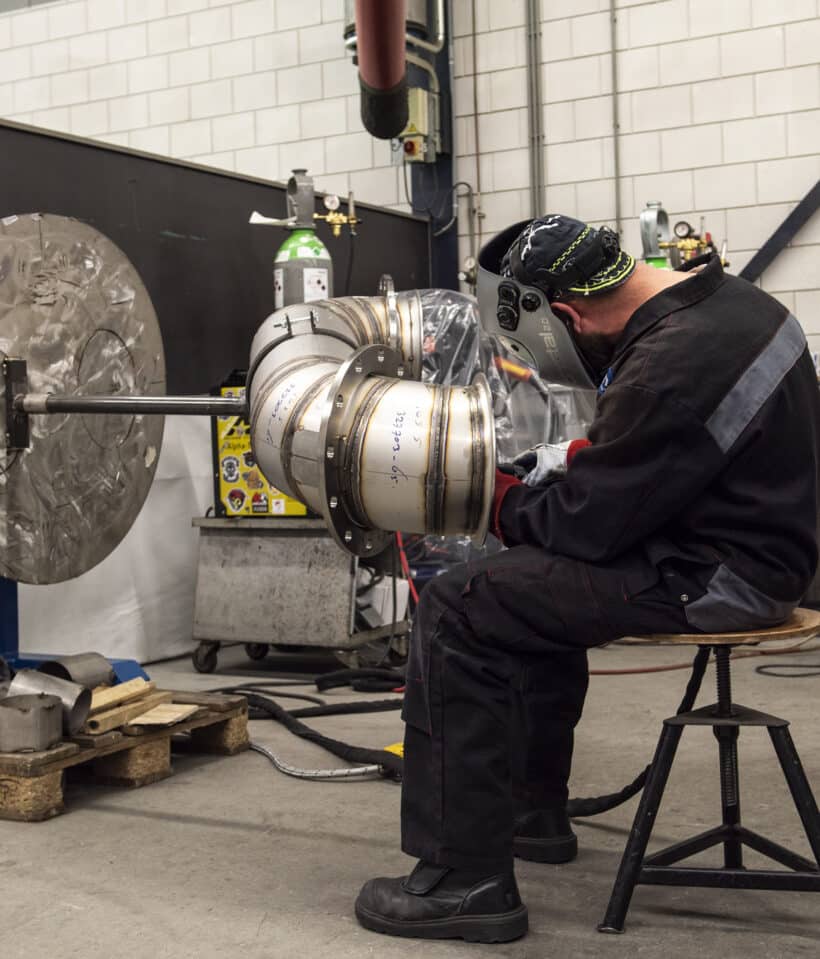
"Our objective of achieving a 70% reduction in air pollution has been met. We are very satisfied with this result."
Looking to control welding fumes in your workplace?