Everything about ethylene oxide
How to control ethylene oxide in your warehouse: ventilation or filtration?
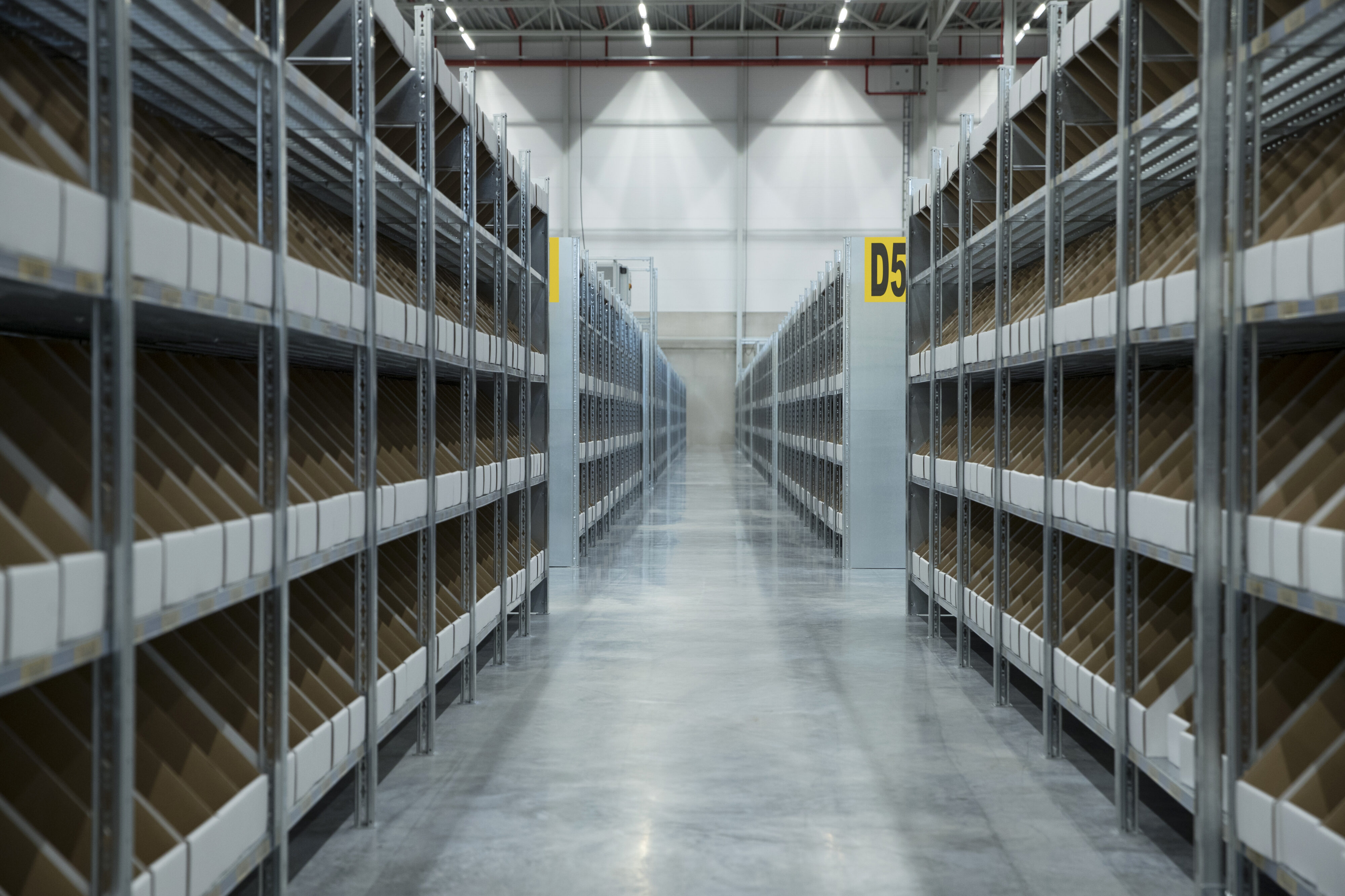
When it comes to removing ethylene oxide (EtO) from the air in warehouses, ventilation is often the first solution that comes to mind. That seems logical, but additional ventilation often involves high energy and investment costs. A sample calculation for a warehouse of 100,000 m³ shows that recirculating EtO filtration can be more favourable than additional ventilation, both in terms of investment and annual costs.
The problem: ethylene oxide in warehouses
Ethylene oxide (EtO) is used to sterilise medical products. Even after these products have been packaged and stored, EtO can still be released from products, packaging or pallets. As a result, air quality in warehouses and logistics environments can be affected. Because EtO is a CMR substance — carcinogenic, mutagenic and toxic to reproduction — companies must prevent exposure as much as possible and demonstrably control concentrations in indoor air.
In practice, two technical solutions are often considered:
- Ventilation
- Filtration
Both solutions have the same objective: reducing the concentration of ethylene oxide in the air. However, the way they achieve this differs significantly.
Ventilation versus filtration: what is the difference?
Ventilation
With ventilation, polluted indoor air is extracted and replaced with outdoor air. This reduces the concentration of EtO in the warehouse. The disadvantage is that all incoming outdoor air then has to be heated or cooled to maintain a comfortable indoor climate. In addition, continuously moving large volumes of air requires a significant amount of energy.
Furthermore, EtO cannot simply be discharged outdoors. Because it is a harmful substance, emission requirements may apply to the air being extracted. Additional ventilation may therefore reduce indoor concentrations, but it also requires attention to emissions into the surrounding environment.
Filtration
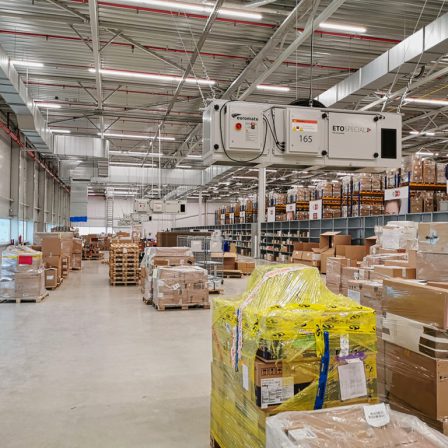
With filtration, the air remains inside the building. The air is passed through filters that remove ethylene oxide, after which the treated air is returned to the space. For this comparison, Euromate’s EtO filters were assessed: a solution specifically developed to remove ethylene oxide from indoor air.
Case study: a warehouse of 100,000 m³
To compare the costs of both solutions, the calculation is based on a warehouse in Breda with a volume of approximately 100,000 m³. The required air treatment rate is one air change per hour, which equals an airflow rate of 100,000 m³ per hour. The warehouse operates 24 hours a day, 7 days a week.
Why ventilation costs more than is often assumed
On paper, ventilation may seem like a straightforward solution. In practice, however, the main cost factor is not only the ventilation system itself. With an airflow rate of 100,000 m³ per hour, outdoor air has to be supplied continuously. In winter, this air must be heated; in summer, it must be cooled. Fans are also required to move these airflows day and night.
Even when heat recovery is used, considerable energy demand and maintenance costs remain. The air has to be moved mechanically, often with fans on both the supply and extraction sides. This increases electricity consumption. In addition, the system must have sufficient capacity to handle peak heating and cooling demand. As a result, not only operational expenditure (OPEX), but also capital expenditure (CAPEX), plays an important role.
The investment: ventilation versus filtration
The indicative costs shown below are based on the Dutch market situation. Prices may vary in other countries due to differences in energy costs, installation costs, labour rates, maintenance costs and local market conditions. Please contact us for a cost indication for your specific country.
Looking only at the initial investment, the following picture emerges:
| Solution | Indicative investment |
|---|---|
| EtO filtration | € 600,000 – € 650,000 |
| Ventilation without heat recovery | € 750,000 – € 1,250,000 |
| Ventilation with heat recovery | € 1,100,000 – € 1,800,000 |
For the further comparison, mid-range values were used: €900,000 for ventilation without heat recovery, €1,400,000 for ventilation with heat recovery and €625,000 for filtration. Based on these assumptions, the investment required for filtration is lower than for the ventilation solutions assessed.
Annual costs: what happens after the investment?
In addition to the initial investment, annual costs are at least as important.
For ventilation, these costs consist of:
- Heating and cooling the air
- Fan energy
- System maintenance
For filtration, the costs consist of:
- Electricity consumption of the units
- Maintenance of the filter systems
The calculated annual costs are as follows:
| Solution | Annual costs |
|---|---|
| Ventilation without heat recovery (natural gas) | € 412,300 |
| Ventilation without heat recovery (heat pump) | € 362,800 |
| Ventilation with heat recovery (natural gas) | € 282,100 |
| Ventilation with heat recovery (heat pump) | € 272,200 |
| HF-EtO filtration | € 275,000 |
What stands out is that filtration is comparable to ventilation with heat recovery in terms of operational costs, while requiring a significantly lower investment.
What does this mean for the total cost of ownership?
Investment decisions often consider Total Cost of Ownership (TCO): the total costs over several years. This includes both the investment and annual operational costs. Over a five-year period, the comparison is as follows:
| Solution | TCO after 5 years |
|---|---|
| Ventilation without heat recovery (natural gas) | € 2,961,500 |
| Ventilation without heat recovery (heat pump) | € 2,714,000 |
| Ventilation with heat recovery (natural gas) | € 2,810,500 |
| Ventilation with heat recovery (heat pump) | € 2,761,000 |
| HF-EtO filtration | € 2,000,000 |
Within this sample calculation, the filtration solution emerges as the most favourable option.
What should you consider when making your decision?
The right solution always depends on the situation in your warehouse. Nevertheless, this comparison shows that ventilation is not automatically the most economical choice when the primary objective is to reduce ethylene oxide in indoor air. Especially when no suitable ventilation system is already in place, investment and energy costs can quickly increase.
In this practical case, recirculating EtO filtration proves to be an interesting alternative, both in terms of investment and total costs over several years.
Need insight into the situation inside your warehouse?
Every warehouse environment is different. Factors such as warehouse volume, air flows, operating hours and existing installations all influence the final solution. Would you like to know which approach best suits your situation? Contact us for advice on controlling ethylene oxide in your warehouse or logistics environment.