Everything about ethylene oxide
Ethylene oxide in the workplace risk assessment: how to build audit-ready EtO documentation

Organisations that receive, store or handle EtO-sterilised medical devices may face exposure to ethylene oxide (EtO), even when they do not carry out the sterilisation process themselves. EtO should therefore be included in the workplace risk assessment. By identifying the risks, monitoring exposure and documenting appropriate control measures, organisations can create audit-ready EtO documentation that supports compliance, audits and a safer working environment.
Why should ethylene oxide be included in the workplace risk assessment?
Many logistics organisations assume that ethylene oxide is only relevant to companies that carry out sterilisation themselves. In practice, this is not the case. EtO may continue to off-gas from sterilised medical devices, packaging and pallet loads for an extended period. Employees may therefore still be exposed to the gas during everyday logistics activities.
This may be relevant at:
- warehouses;
- distribution centres;
- cross-docking facilities;
- air cargo terminals;
- locations where medical devices are stored or repacked.
As every employer is responsible for identifying workplace risks, potential exposure to ethylene oxide should also be addressed in the workplace risk assessment.
Why does ethylene oxide require particular attention?
Ethylene oxide is a CMR substance: carcinogenic, mutagenic and toxic to reproduction. The property that makes the gas effective for sterilisation — its ability to damage DNA — also makes it a health risk when people are exposed to it. The assessment should therefore not focus solely on the statutory workplace exposure limit. Under the ALARA principle, exposure must always be kept as low as reasonably achievable.
In practice, organisations should be able to demonstrate:
- where EtO may be released;
- which concentrations have been measured;
- which control measures have been implemented;
- how exposure is controlled on an ongoing basis.
What should audit-ready EtO documentation contain?
Audit-ready EtO documentation demonstrates that ethylene oxide has been assessed and controlled systematically.
| Component | Why it is important |
|---|---|
| Process mapping | Provides insight into goods flows and logistics processes |
| Risk scenarios | Identifies activities and situations where exposure may occur |
| Monitoring strategy | Records where, when and why measurements are taken |
| Control measures | Provides the rationale for technical and organisational measures |
| Ongoing assurance | Records monitoring, evaluation and follow-up actions |
This creates one central source of information that can be used by QHSE, Operations, Facilities and Quality teams, as well as during audits.
Why should a robust risk assessment start with monitoring?
Organisations sometimes invest directly in ventilation or air filtration before establishing where exposure occurs and what concentrations are present. Starting with a well-designed monitoring plan helps ensure that the right control measures are selected.
Strategic monitoring locations may include:
- inbound docks;
- staging areas;
- value-added services (VAS) workstations;
- quality assurance sampling rooms;
- pallet racking containing sterilised products;
- returns and quarantine areas;
- areas with limited air changes.
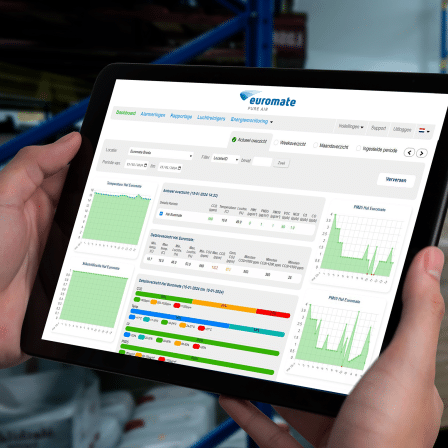
Monitoring data reveals where peak concentrations occur and helps determine whether control measures are having the intended effect.
How can ethylene oxide be controlled on an ongoing basis?
An effective approach consists of three consecutive steps.
1. Identify
Determine which goods flows may involve EtO and during which activities employees may come into contact with the gas.
2. Monitor
Carry out measurements at strategic locations. Continuous monitoring provides greater insight than a single measurement, as concentrations may vary depending on factors such as packaging, storage duration, ventilation and logistics activities.
3. Control
Use the monitoring results to select appropriate control measures. These may range from changes to working processes to targeted air filtration or local extraction at exposure hotspots.
What are the benefits of audit-ready EtO documentation?
Well-substantiated documentation supports several departments within the organisation.
| Department | Benefit |
|---|---|
| QHSE | Demonstrable control of exposure risks |
| Operations | Practical measures with minimal unnecessary disruption |
| Facilities | Evidence-based decisions on ventilation or air filtration |
| Quality / GDP | Supporting evidence for audits and customers |
By bringing together risks, monitoring data and control measures, the organisation creates a shared and substantiated understanding of the situation.
Frequently asked questions
- Should ethylene oxide always be included in the workplace risk assessment?
Where employees handle EtO-sterilised medical devices or packaging from which EtO may off-gas, potential exposure should be assessed as part of the workplace risk assessment. - Why is compliance with the workplace exposure limit alone not sufficient?
The ALARA principle applies to CMR substances. Even when concentrations remain below the statutory workplace exposure limit, exposure should be kept as low as reasonably achievable. - Why is workplace air monitoring important?
Ethylene oxide is colourless and difficult to detect. Monitoring identifies where exposure is actually taking place. - Is a single measurement sufficient?
Not always. Concentrations may vary depending on storage duration, logistics processes and ventilation. Continuous monitoring therefore provides a more reliable picture of the working environment. - What is audit-ready EtO documentation?
It is a complete set of documentation in which the identified risks, monitoring results, control measures and ongoing assurance activities are demonstrably recorded.
Need greater insight into ethylene oxide within your workplace risk assessment?
A sound risk assessment starts with reliable monitoring data. Discuss your situation with one of our specialists to determine which approach is most appropriate for your working environment.