HF EtO air filtration
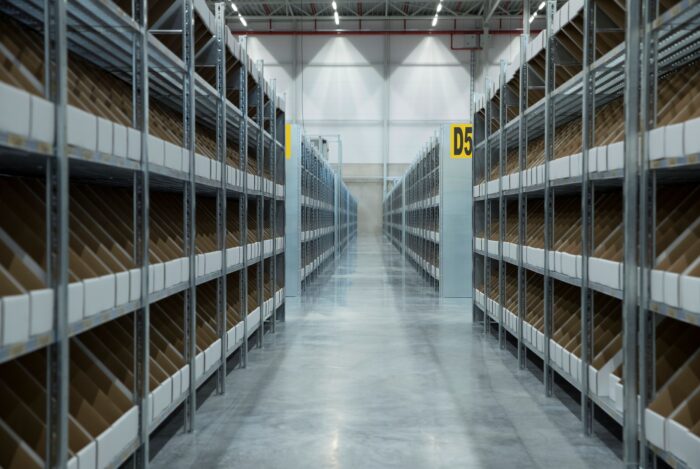
Ethylene oxide (EtO) is a hazardous gas widely used for sterilising medical products. During storage, EtO can continue to be released from cardboard packaging and from beneath plastic film for months. This happens gradually and, because the gas is invisible and has a high odour threshold, concentrations in warehouses can rise significantly.
Legal framework
EtO is classified as a CMR substance: carcinogenic, mutagenic and reprotoxic. Due to its serious health effects, there is no safe lower exposure limit. Employers are responsible for providing a safe working environment and have a duty of care towards their employees.
Even below the statutory Dutch limit value of 0.46 parts per million (ppm), or 0.84 mg/m³ as an 8-hour time-weighted average (TWA), EtO exposure must be actively minimised in accordance with the ALARA principle: As Low As Reasonably Achievable. Once measured exposure exceeds 10% of the statutory limit value, employers must take active measures to achieve further reduction.
Why air filtration matters
Ventilation and filtration are important methods for reducing EtO levels in indoor environments. A good supply of fresh air helps prevent local concentration peaks, also known as hotspots. However, discharging air outdoors and recirculating air are subject to strict regulations, depending on local legal and environmental requirements.
Air filtration is an attractive alternative, particularly when ventilation alone is not sufficient. It is also highly energy-efficient, as no additional heating or cooling load is created.
HF EtO
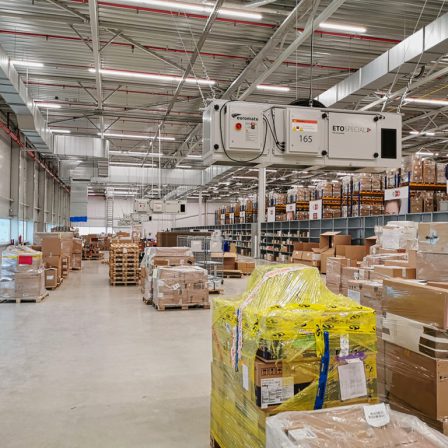
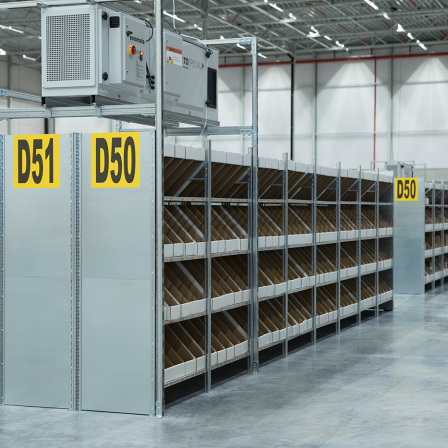
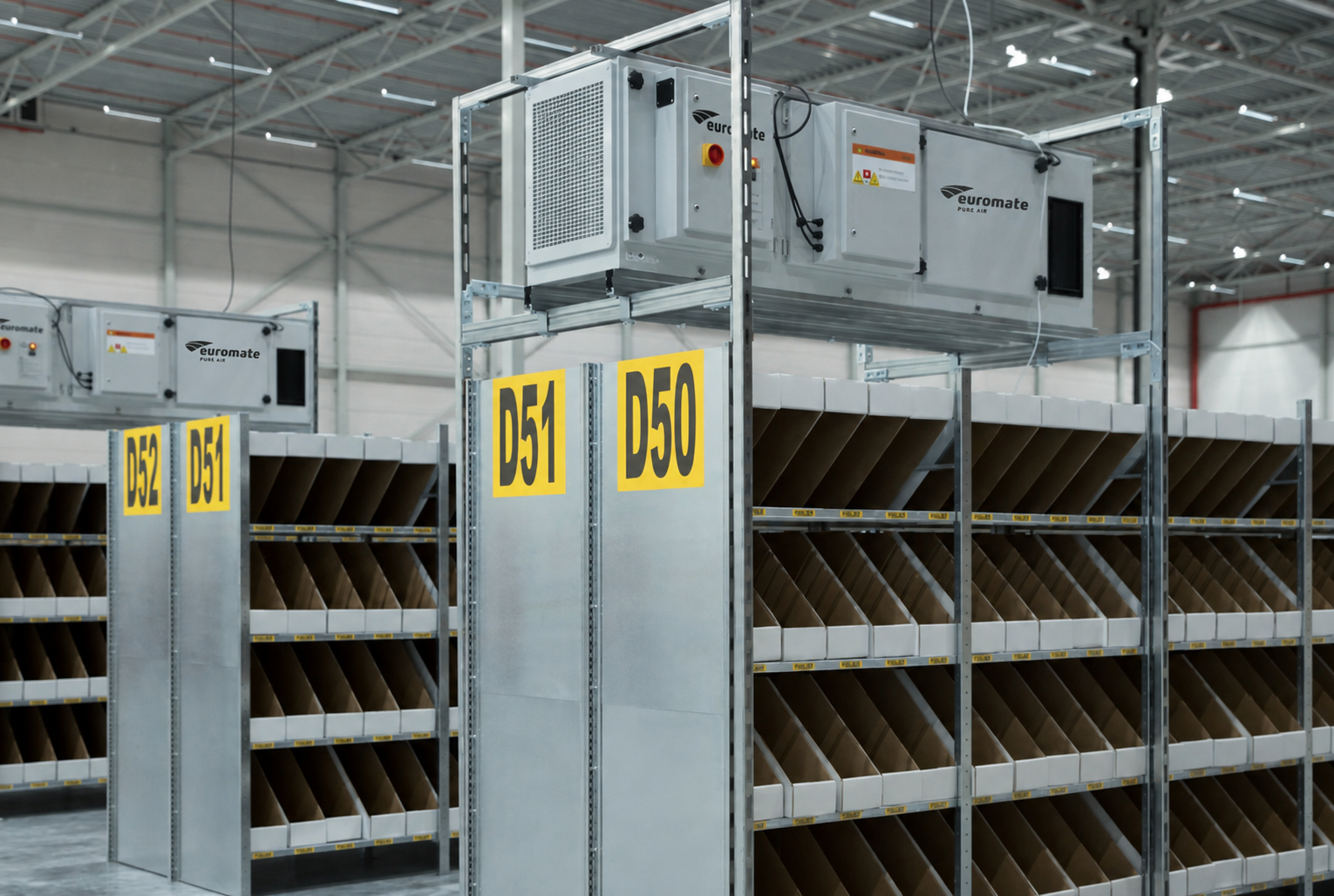
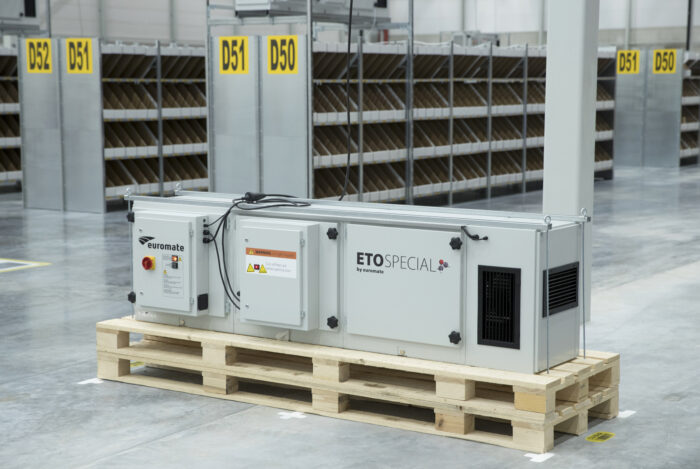
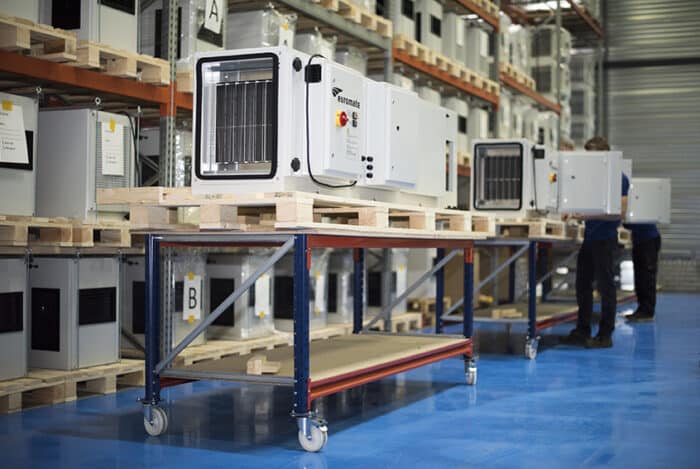
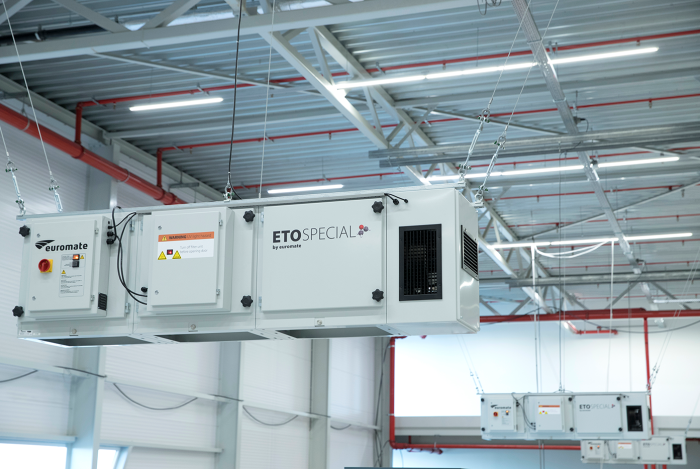
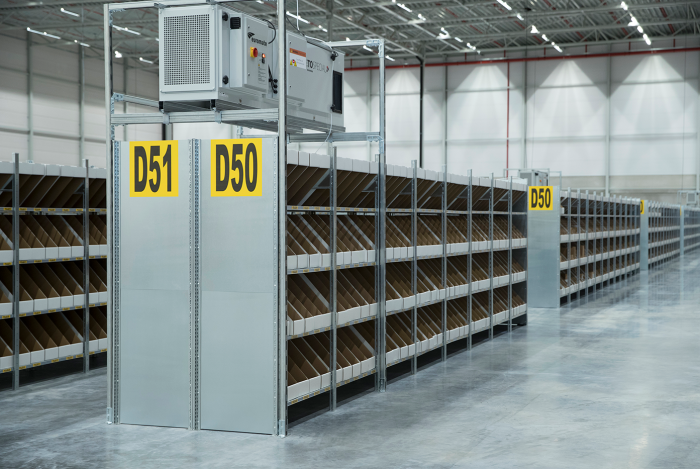
The HF EtO is an advanced air cleaner specifically developed for the safe removal of ethylene oxide (EtO, C₂H₄O) from indoor air in industrial, logistics and medical environments. The unit combines multiple filtration technologies in one powerful and scalable system. It has been designed with safety, effectiveness and reliability in mind and can be installed flexibly, either on pallet racking or suspended from the roof structure.
Multiple stages
Depending on the EtO concentrations and your air quality objectives, we provide tailored solutions with different airflows and filtration configurations. The proposed solution is aligned with the usage profile, budget and required level of reduction.
The first stage consists of an electrostatic fine dust filter (ESP), which effectively removes airborne particles such as dust, cardboard fibres and rubber particles from the air. This protects the subsequent filtration stages from premature saturation and improves the effectiveness and service life of the system.
In the following stage or stages, various options are available for advanced gas removal. We use CKV3 and Kinetic 425, a specially selected filtration medium optimised for EtO adsorption. The air is guided through these adsorption layers, where ethylene oxide is actively and safely captured.
Preventing hotspots
The integrated fan of the HF EtO draws in air from the rear of the unit and pushes the cleaned air back into the room through the outlet duct. This design promotes air circulation, minimises dead zones and helps prevent hotspots.
Energy-efficient system
The HF EtO operates on the basis of recirculation: existing indoor air is filtered and returned to the room, without the need for additional outdoor air. This prevents extra heating and cooling loads and makes the system highly energy-efficient. It also prevents EtO from being discharged outdoors, which is subject to strict regulation.
Insight
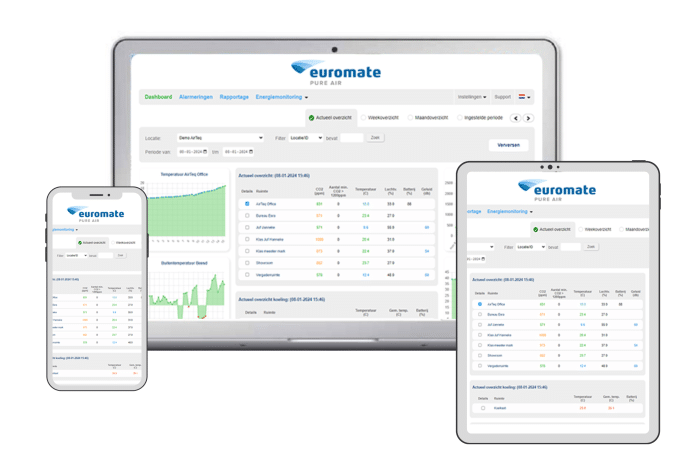
Reliable measurement data form the basis for an effective mitigation plan. Depending on the situation, we offer spot measurements and long-term monitoring in collaboration with specialised independent partners. Based on the measurement data, risks are identified, priorities are set and measures are substantiated.
For more in-depth analysis, air sampling with laboratory analysis is also possible. This method provides highly accurate results and is often used for validation or legal substantiation. This gives you reliable data to minimise exposure and comply with your duty of care under the ALARA principle.
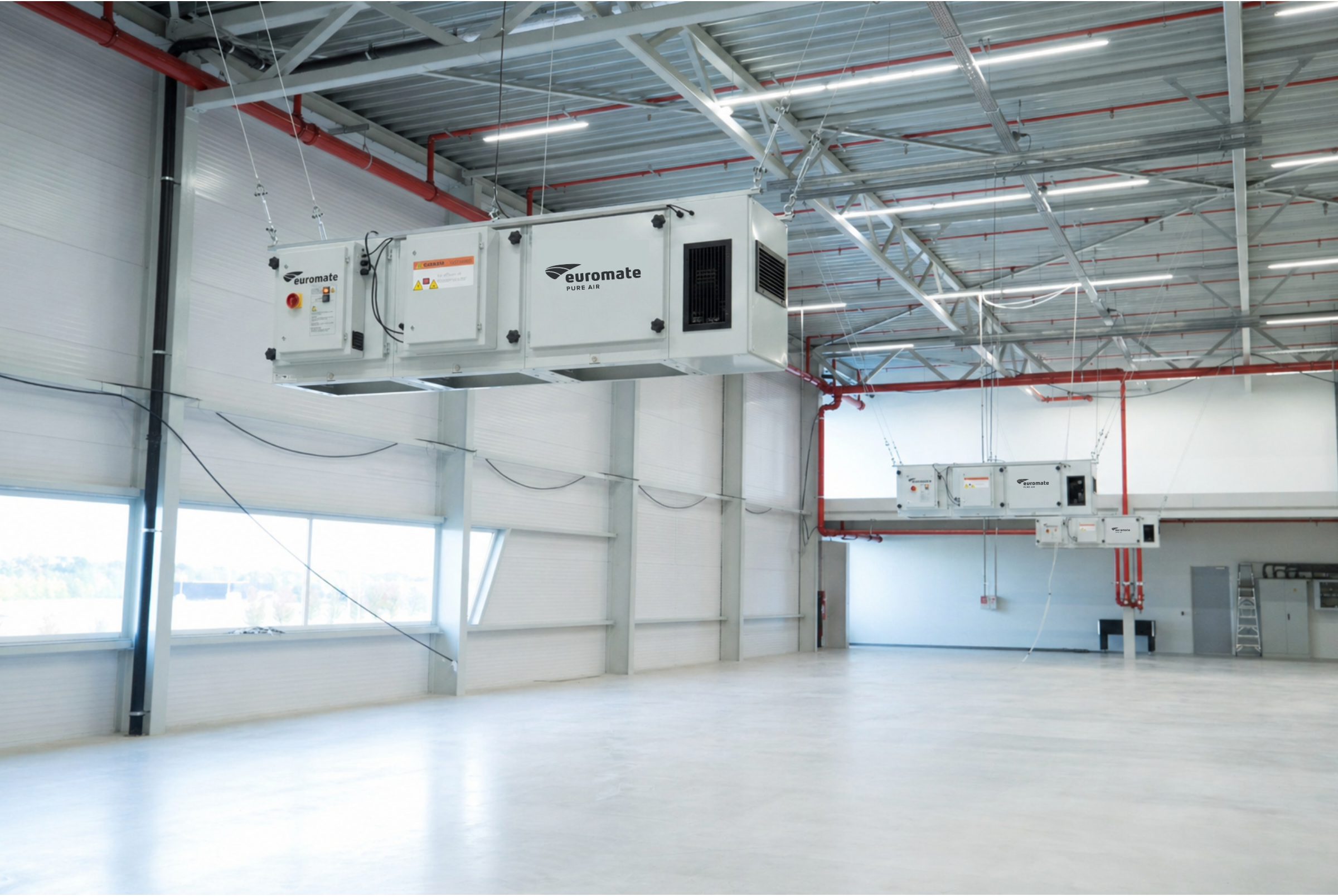
What can you expect from the HF EtO?
- Removes ethylene oxide in a proven and effective way
- Advanced filtration systems for industrial applications
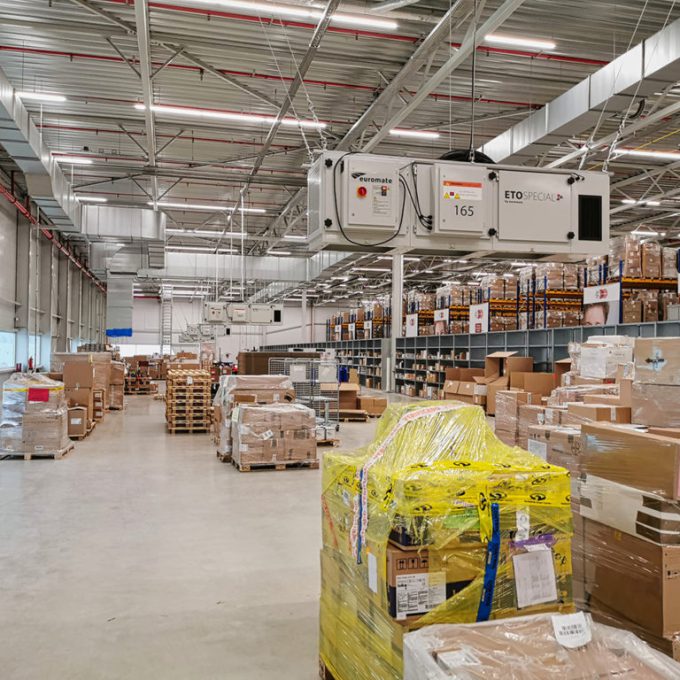
- Improved air quality in logistics halls, sterilisation facilities and production environments
- Reduced health risks for employees
- Helps support compliance with safety and environmental regulations

Step-by-step approach to a safe working environment
No two EtO situations are the same. Every working environment has its own challenges, risks and ambitions. That is why we guide companies step by step towards a structurally safer working environment, in collaboration with a network of independent experts. The process is tailored to each situation and consists of four phases.

Quick scan
We start with an exploratory visit to assess the situation. Based on this observation, we identify potential risk zones and determine where measurements will be most useful.

Detailed measurements
In this phase, the actual concentrations are mapped. The measurement data form the basis for further analysis and provide insight into peak moments, distribution and trends over time.

RI&E considerations and ambition setting
The measurement results are translated into clear objectives. Together, we define realistic reduction targets and priorities, aligned with statutory standards and business objectives.

Detailed design and implementation plan
Based on the measurement data and objectives, we design a tailored solution for filtration and monitoring. We also advise on maintenance, periodic validation and continuous improvement in accordance with the ALARA principle.
Frequently asked questions about the HF EtO air cleaner
Ethylene oxide (EtO) is a volatile gas widely used for sterilising medical products. It is classified as a CMR substance: carcinogenic, mutagenic and reprotoxic. Because there is no safe lower limit for EtO, any exposure represents a health risk. The gas is invisible and has a high odour threshold, which means employees cannot detect it, even when concentrations have already risen significantly.
During the storage of sterilised goods, EtO can continue to be released from cardboard packaging and from beneath plastic film for months.
Employers have a duty of care and are required to actively minimise EtO exposure in accordance with the ALARA principle: As Low As Reasonably Achievable. This is not only about complying with the statutory limit value of 0.46 ppm, but also about taking all reasonably practicable measures to reduce exposure further.
In practice, an action value of 0.046 ppm is often used for this purpose. This is 10% of the limit value and is derived from the methodology of NEN-EN 689.
The HF EtO combines multiple filtration technologies in one modular system. In the first stage, an electrostatic filter (ESP) removes airborne particles such as fine dust, cardboard fibres and rubber. This protects the subsequent filtration stages and extends the service life of the system.
In the subsequent stage or stages, EtO is actively captured using adsorption layers with CKV3 and Kinetic 425, a specially selected filtration medium optimised for EtO adsorption. The integrated fan promotes air circulation and helps prevent dead zones and hotspots.
The HF EtO operates on the basis of recirculation: existing indoor air is filtered and returned to the room without the need for additional outdoor air. This prevents additional heating and cooling loads and makes the system highly energy-efficient. An additional benefit is that no EtO is discharged outdoors, which is important given the strict regulations surrounding external EtO emissions.
Euromate guides organisations through a structured step-by-step process. This starts with a quick scan: an exploratory visit to identify risk zones and determine where measurements will be most useful.
We then measure ethylene oxide concentrations in collaboration with independent partners, using spot measurements or long-term monitoring. The measurement data form the basis for defining reduction targets and designing a tailored solution.
The HF EtO is scalable and modular, allowing the system to be deployed with the right capacity and to grow with your business activities. The unit can be installed flexibly on pallet racking or suspended from the roof structure. It is a ready-to-use plug-and-play solution that requires no structural modifications.
The filtration configuration is tailored to the measured EtO concentrations, your air quality objectives, budget and usage profile.
Would you like to know more about the HF EtO air cleaner?
Our brochure provides more information about the applications and operation of the system. After completing the form, you will receive the requested documentation in your inbox within a few minutes.
View all our products
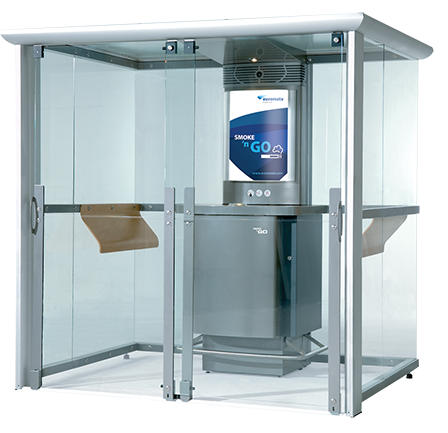
Smoke 'n Go Series tobacco smoke filtration
- Leaves no traces of tobacco smoke and unpleasant odours
- Five-stage filtration including HEPA or electrostatic filter
- A flexible range with a solution for every smoking environment

HF EtO air filtration
- Removes ethylene oxide in a proven and effective way
- Contributes to a healthy and safe working environment
- Specifically developed for logistics halls and warehouses
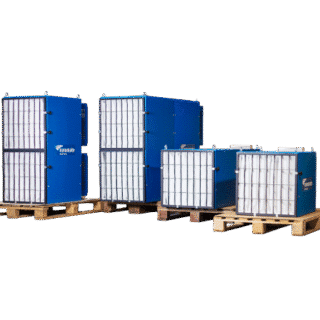
DFI Series industrial air cleaners
- Ensures dust reduction of up to 90%
- customised solution based on dust concentration
- Suitable for warehouses, industrial and logistic halls
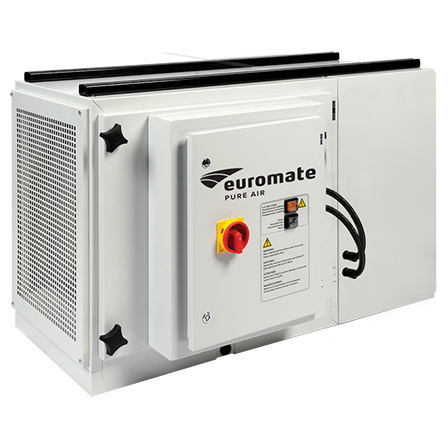
HF Series industrial air cleaners
- Filters up to 90% of the contamination
- Suitable for industrial environments
- Customized solution for different pollution sources
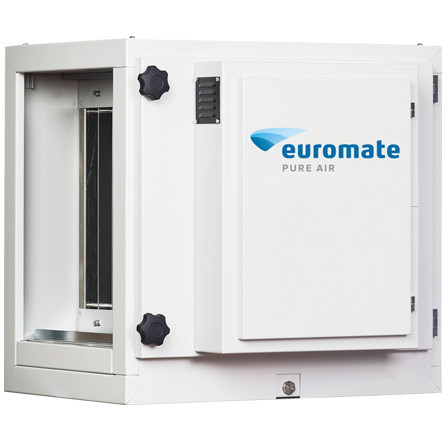
SF Series Kitchen Air Filtration
- Filters up to 90% grease and soot particles
- Ensures less risk of fire
- Total solution for every kitchen air problem
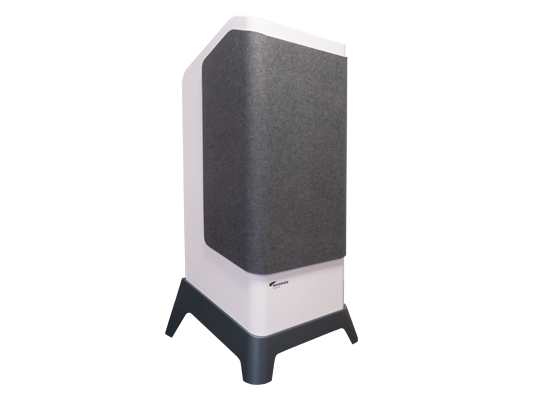
Pure Air Shield 3300
- Removes fine dust, viruses and bacteria
- Suitable for large spaces (from 200m2)
- SGS certified, proven effective
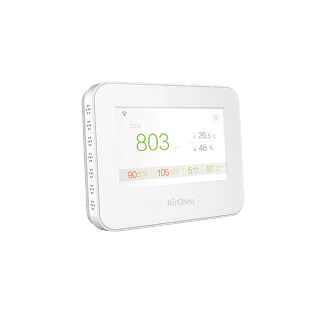
Air quality sensors
- Measures PM 10, PM 2,5, PM 1, CO2, temperature and humidity
- Always real-time insight into your air quality
- Periodic reports and alerts available
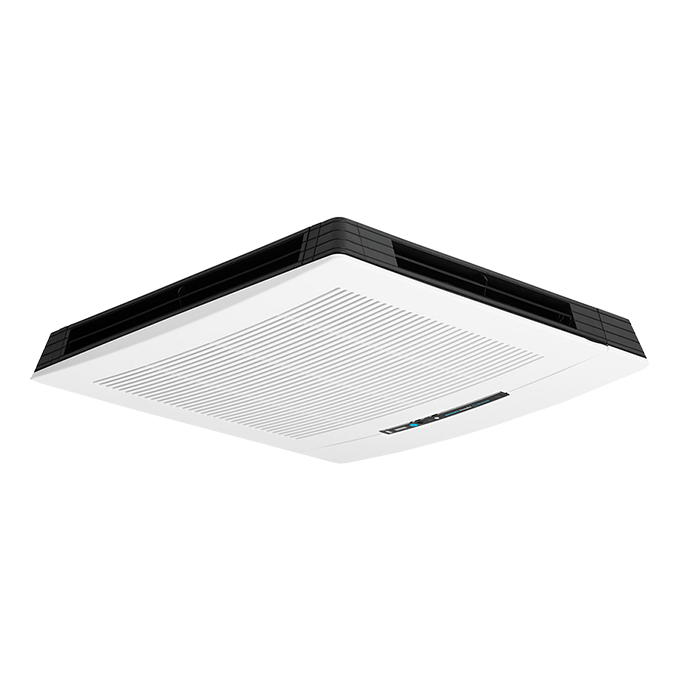
VisionAir Blue Line
- Wide range of applications thanks to unique filter combinations
- SGS certified and therefore proven effective
- Has a positive effect on productivity and absenteeism
Would you like to know whether EtO filtration is the right solution for your organisation?